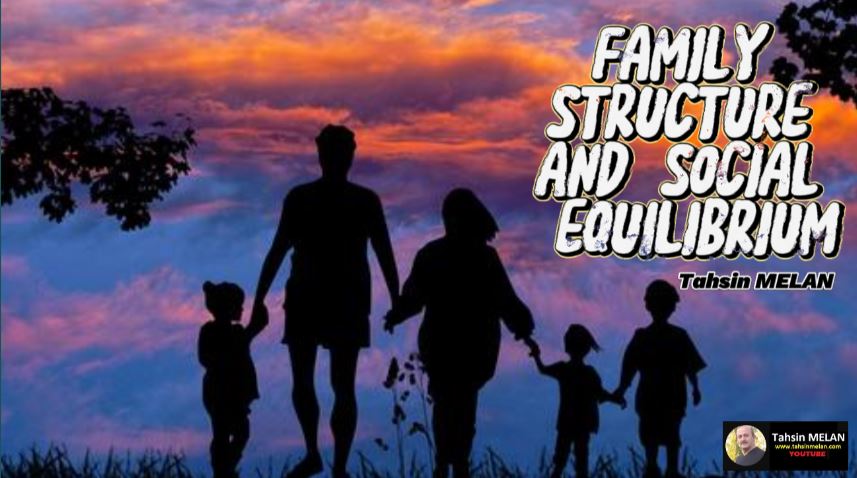
FAMILY STRUCTURE AND SOCIAL EQUILIBRIUM
The concept of family holds significant importance and value in all societies. Family is a unit where individuals experience their initial social interactions, forming emotional bonds. These bonds provide individuals with the opportunity to develop crucial emotional skills such as empathy, love, and responsibility. A healthy communication environment and affectionate relationships within the family allow individuals to express themselves, build a sense of trust, and become emotionally resilient.
The structure of family ties plays a vital role in both individual and community well-being and stability. In contemporary times, the notion of family not only signifies a biological union but also plays a fundamental role in the social, emotional, and cultural development of individuals. The family is considered a unit where the first social relationships are established, values are transmitted, and the foundations of personal development are laid. Unfortunately, many families undergo dissolution for various reasons, significantly impacting societal balances.
In this article, I will explore the importance of family ties, reasons leading to the breakdown of families, and shed light on the reflections of such disruptions on the general fabric of society. The significance of family structure, its breakdown, and the potential effects of this breakdown on the order and stability of society can be categorized under three main headings:
First Section: IMPORTANCE AND VALUE OF FAMILY
- Societal Importance of Family: The societal importance of family is crucial in the transmission of core values, culture, and traditions from generation to generation. Healthy family structures ensure the stability and resilience of society. Families teach individuals social responsibilities and help them develop skills to establish healthy relationships with other members of society.
- Emotional Support, Care, and Security: Family life serves as the safest haven where individuals can find comfort, care, and emotional support during challenging times. Strong family bonds, by enabling open communication and fostering a sense of belonging, enhance emotional well-being and, consequently, increase the sense of trust.
- Socialization and Moral Development: Families serve as the fundamental unit for socialization, where children learn important values, moral principles, and social norms and traditions. A closely-knit family contributes to shaping an individual’s character, moral inclinations, and development, instilling empathy, courtesy, and other essential virtues.
- Support, Solidarity, and Guidance: Family members often provide practical assistance, such as childcare, financial support, and advice based on experience, during times of need. This system of practical support and solidarity enables individuals to face challenges more consciously and resiliently, facilitating personal development.
- Preservation of Cultural Tradition and Heritage: Families act as a refuge and protector of cultural values, traditions, and religious teachings, ensuring their continuity over generations. The sharing and transmission of cultural knowledge within the family contribute to the development and preservation of cultural identity for individuals, ultimately encompassing societal values. This fosters a sense of belonging first to the family and then to the larger community.
Second Section: FACTORS LEADING TO FAMILY BREAKDOWN
- Lack of Communication: Effective communication is a fundamental element in a healthy family. However, when there is a lack or breakdown of communication among family members, conflicts, misunderstandings, and tensions may arise. Communication deficiencies can weaken emotional bonds, leading family members to drift apart. If parents fail to prioritize and engage in emotional communication with their children, a sense of emotional void may develop, weakening family ties over time.
- Economic Issues: Economic problems within a family, such as financial difficulties and income disparities, can create tension and conflicts among family members. Economic hardships may make it challenging for family members to meet their basic needs, resulting in emotional burdens. Unemployment and financial struggles can elevate stress levels within the family, leading to disagreements and strained relationships. A family breadwinner struggling with unemployment may lose communication with other family members due to financial stress, potentially leading to the breakdown of the family.
- Technological Influences: Technological advancements in the modern era can impact family relationships. Smartphones, social media, and other digital tools may reduce face-to-face communication among family members. When the balance between the virtual and real worlds is disrupted, family bonds can weaken. If individuals in a family constantly focus on their phones, distancing themselves from interpersonal interactions, it can inevitably lead to weakened family ties and emotional disconnection.
- Inability to Manage Conflicts: Conflicts may arise in every family, but the inability to manage these conflicts in a healthy manner can lead to tension and unrest within the family. Ongoing conflicts among family members can gradually erode relationships. Dissatisfaction, infidelity, and irreconcilable differences in marriage can shake the foundations of the family, ultimately leading to divorce or separation. The separation or divorce of parents typically has a profound impact on children, affecting their emotional well-being and overall development, as indicated by scientific research.
- Changing Social Dynamics and Individualism: Rapid social changes, urbanization, and increased mobility can weaken traditional family structures, creating distance and disconnection among family members. The rise of individualism and the departure from collective responsibility can diminish the sense of family duty and loyalty. Emphasizing gender differences within the family can also disrupt family order and balance. Television shows and disruptive presentations on social media that glorify the dissolution of marriage can undermine the seriousness and value of the institution.
Third Section: EFFECTS OF FAMILY ORDER ON SOCIAL ORDER AND STABILITY
- Weakening Social Adaptation: The breakdown of families weakens social connections and reduces the support network available to individuals during crisis periods. Consequently, it may lead to feelings of exclusion, a sense of identity loss, and increased mental health issues. These consequences can ultimately impact the overall social fabric.
- Economic Consequences: Family breakdowns can increase societal burdens, such as growing dependency on welfare and the breakdown of support systems. The economic burdens on society may rise due to the decline in two-sided income, with separated family elders experiencing economic difficulties. This, in turn, can indirectly affect social balances, leading to the perpetuation of poverty cycles.
- Social Values and Ethics: Strong family ties are essential for the transmission of values and the development of ethical responsibility. Developing robust moral personalities without a stable family foundation is challenging. Consequently, fractured families may contribute to societal decay in terms of social values and ethical principles.
CONCLUSION
Family holds great importance as the foundation of society, providing emotional support, nurturing moral development, fostering mutual assistance and solidarity, and preserving cultural heritage. The significance of family ties cannot be overlooked. However, due to factors such as communication deficiencies, economic issues, technological influences, and the inability to manage conflicts, many families are experiencing breakdowns. Various factors, including economic pressures, marital conflicts, and societal changes, can contribute to the fragmentation of families. Therefore, ensuring effective communication within the family and strengthening solidarity to cope with economic issues are crucial. Additionally, consciously using technology and managing conflicts in a healthy manner play a critical role in fortifying family bonds and maintaining the societal foundation. The consequences of family breakdowns will have long-term repercussions on the entire society. Social adaptation, economic stability, and ethical values will be adversely affected. Therefore, it is of great significance for individuals, communities, and policymakers to prioritize and actively support the preservation and strengthening of healthy family structures for the well-being of both individuals and society as a whole.
Tahsin MELAN